
Juggling Content
The History of Devilsticks
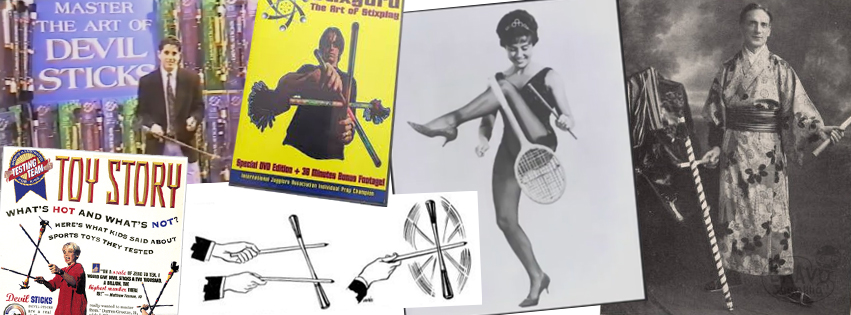
From spinning batons in ancient Asian villages to dazzling circus acts and modern flower sticks, devil sticks have charmed generations of performers and audiences alike. Discover the rich history behind this timeless juggling art.
17–18th century – Asian Origins
The earliest traces of stick play originate in Asia. It remains unclear whether the **devil stick** developed in China and later spread to India, or the other way around.• China – Chinese Baton Play
Da Lian Xiang: a Chinese folk performance in which the performer sang and danced while juggling two batons threaded with bronze coins.
1758. The first known written description of baton play:
It is an acrobatic act evolved from Da Lian Xiang. A performer holds a slender baton in each hand and uses them to strike a third baton, which sometimes twirls, sometimes nods, but never falls. The performance is permeated with singing, dancing, and acrobatic fighting.
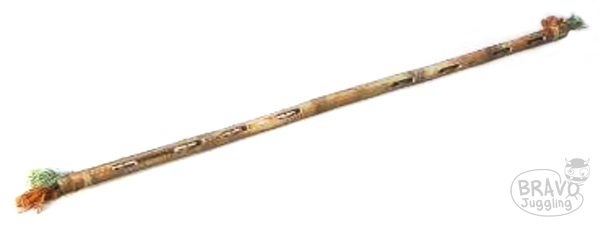
Possibly an early flower stick
• India – Indian Martial Arts
Thang-Ta: the traditional martial art of Manipur
1820. The Manipuri people developed a distinct martial art known as Thang-Ta. Through the mastery of this art, the people of this small kingdom were able to defeat the armies of Burma and neighboring regions.
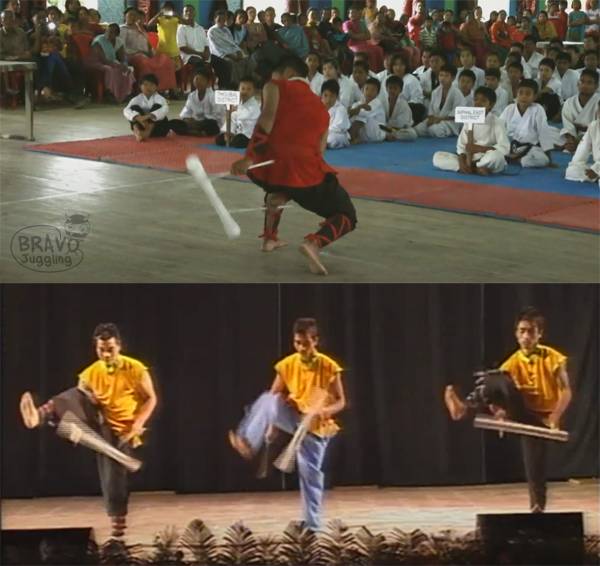
Even today, what we now know as **devil sticks** are still celebrated by the Meitei people of Manipur, India, as part of their cultural heritage.
Early 19th century – Indian Jugglers in Europe
• Indian travelling performersBaton play found its way into the repertoire of some Indian travelling performers who arrived in Europe during the period of British colonisation of India. Exotic and Oriental performances (such as ball juggling, spinning tops, and sword swallowing) were especially popular at the time.
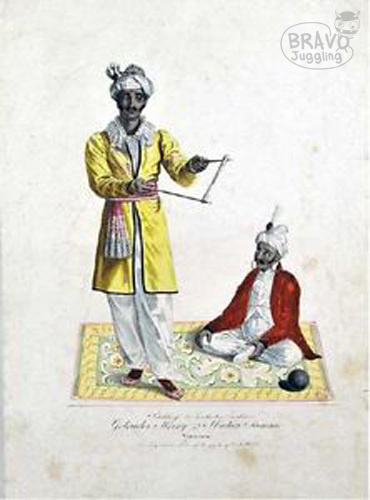
1820. The first known image depicting **devil stick–style juggling**: Mooty and Medua Samme, Indian brothers, performing “Chinese stick play”.
• European performers
European artists were fascinated by the skills of Indian jugglers and began to imitate their tricks, costumes, and even the title “Indian Juggler”.
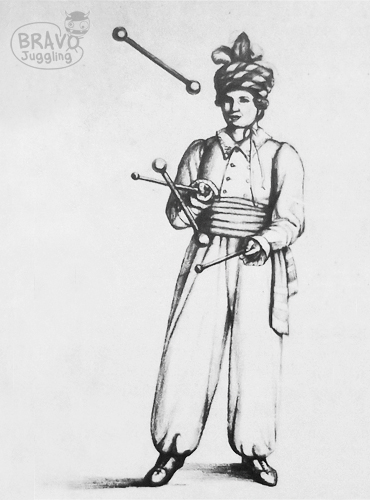
Carl Rappo / Karl von Rapp (1802–1845), a German circus artist, was one of the finest jugglers of his time. He performed with two **devil sticks** and possessed many other skills as well.
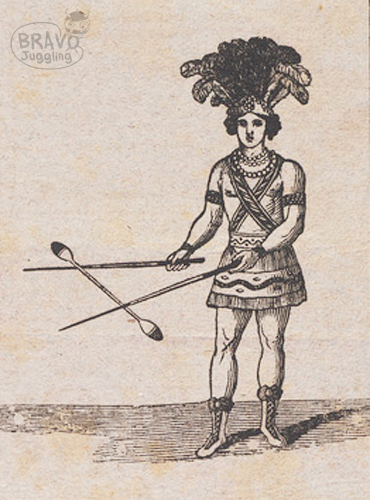
Pierre De Bouche
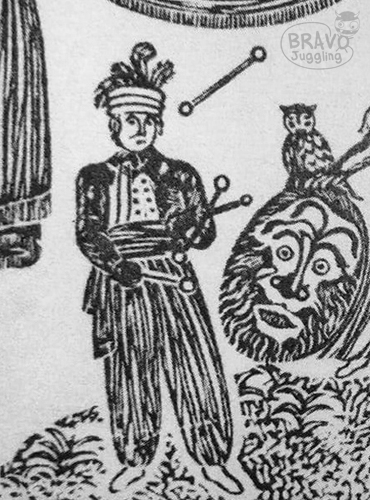
Marobelli
Josephina Schulz was the first woman known to perform with **devil sticks**, verified in 1832. Unfortunately, no image of her has survived.
Second half of the 19th century – The Golden Age of the Circus
From around 1850, the circus became the dominant force in the performance industry. **Devil stick** acts gradually lost prominence, as their relatively small scale could not compete with the size of circus tents. Performers had to rival large-scale acts such as aerial acrobatics, rope walking, and horse shows. Nonetheless – and perhaps because of this challenge – some artists combined **devil stick manipulation** with other acrobatic disciplines.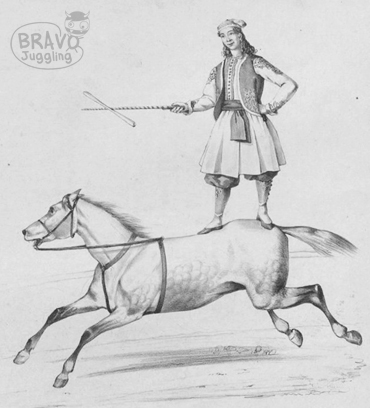
This artist demonstrates **devil stick tricks** while riding a horse.
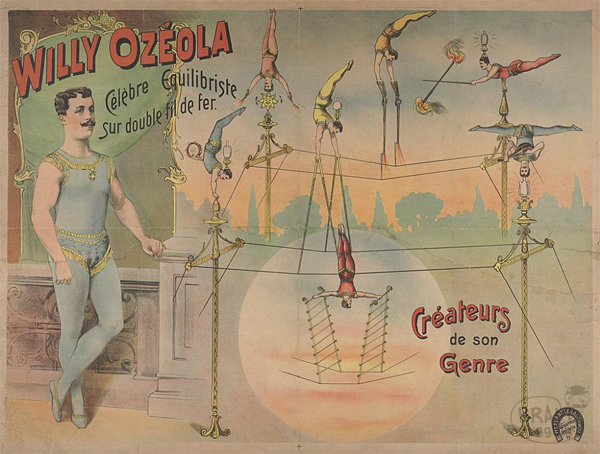
Willy Ozéola combined aerial acrobatics with **devil stick manipulation**, as shown on this poster. It is also one of the earliest known depictions of a fire devil stick.
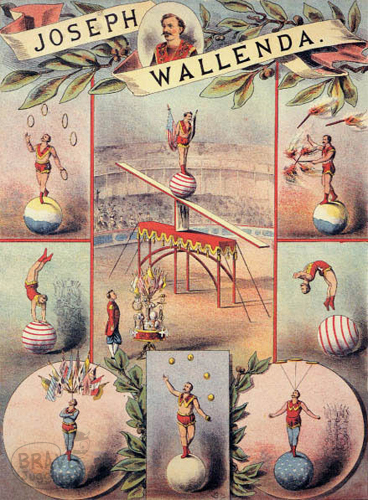
Joseph Wallenda used fire **devil sticks** while performing on a walking globe.
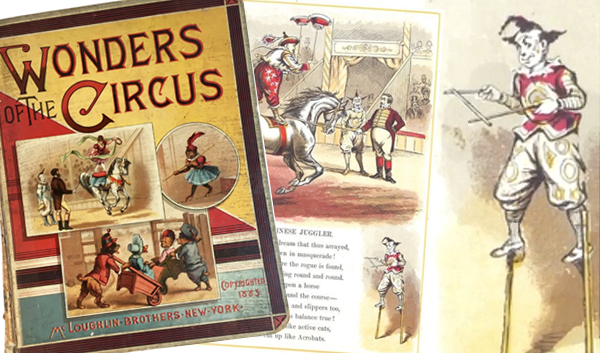
A Chinese juggler performing **devil stick tricks** on stilts, depicted in the book “Wonders of the Circus” by the McLoughlin Brothers (1883).
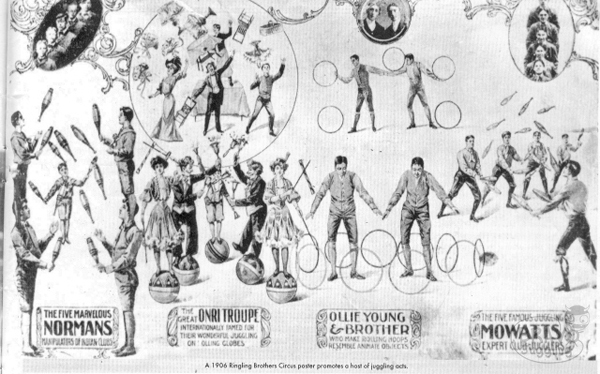
Two women from the Onri Troupe performing **devil stick routines** on walking globes at the Ringling Brothers Circus (1906).
Other Interesting Finds from This Period
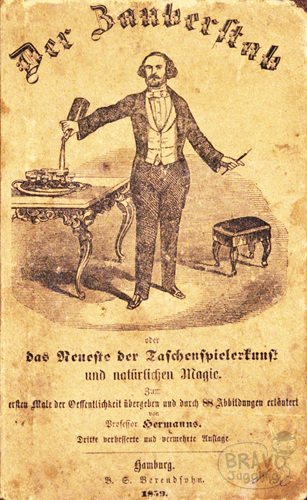
1859. A German book featuring the first known description of how to make a devil stick.
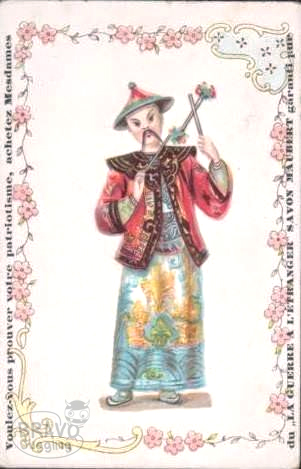
Around 1880. A French soap advertisement featuring the first known illustration of a tassel-ended devil stick (nowadays called a flower stick).
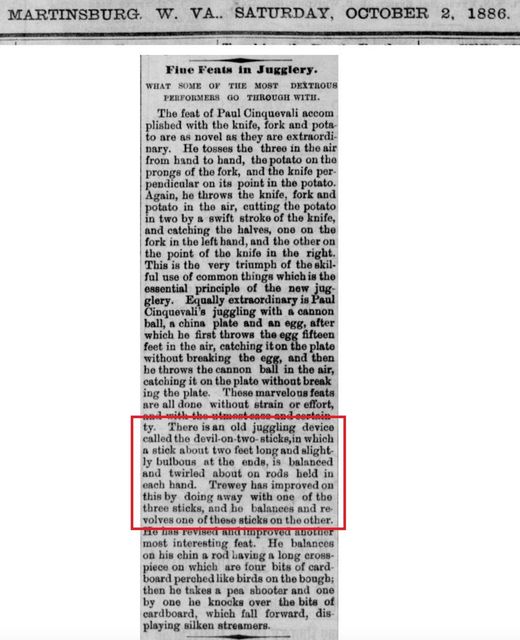
1886. According to this article, the “propeller” move was invented by Félicien Trewey (1848–1920).
Early 20th century – The Rise of Vaudeville
The origin of the name “devil sticks” remains unknown, but the term was first used in the American vaudeville scene. Vaudeville was a theatrical genre of variety entertainment that originated in France in the late 19th century and remained popular in the United States until around 1930. A typical American vaudeville show featured musicians, comedians, trained animals, magicians, acrobats, and jugglers.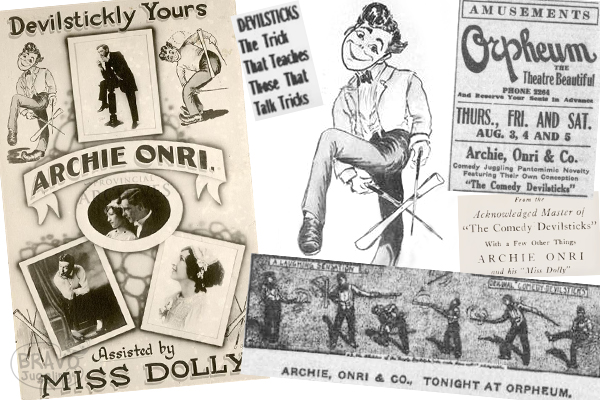
1916. Archie Onri was the first performer officially acknowledged as the “Master of Comedy Devil Sticks”. Together with his assistant, Miss Dolly, he presented a 20-minute juggling act that was very well received by audiences. Posters, newspaper articles, and advertisements documenting his career have survived.
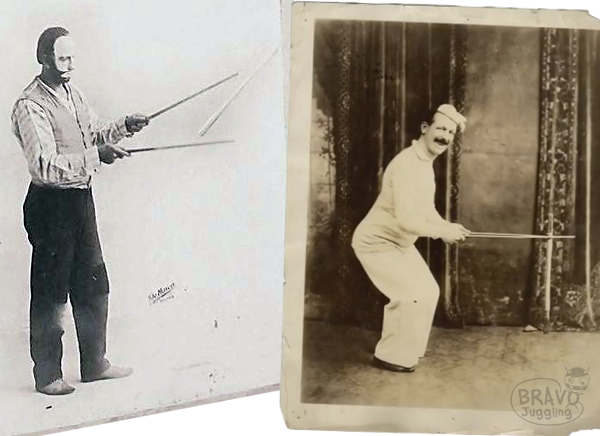
1910–1920. The first two known photographs depicting people performing with **devil sticks**.
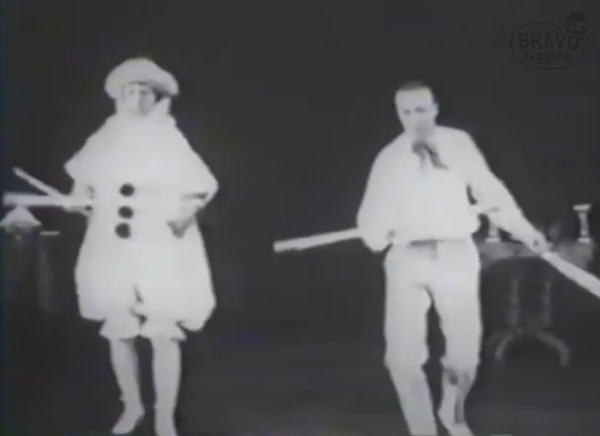
1920. Chicago – The oldest known film footage of **devil stick performers**: “Mayes & Roth – Juggling and Balancing Japanese Diabolos”.
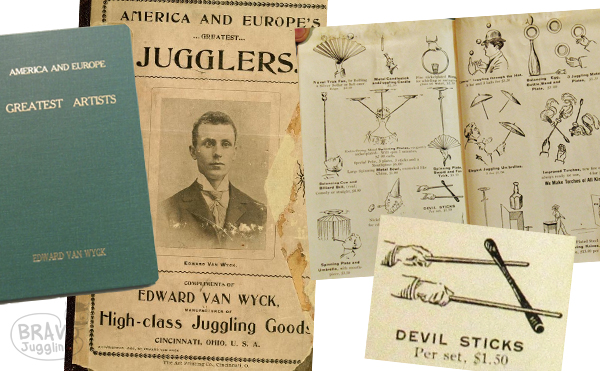
1912. A juggling catalogue featuring the first industrially manufactured devil stick, published in the second edition of the book titled “America and Europe’s Greatest Jugglers” by Edward Van Wyck. Van Wyck was a juggling prop maker who opened his business in Cincinnati, Ohio (USA) in 1895. In 1900, he published a well-known book showcasing jugglers from the USA and Europe using his props. The later edition expanded into a detailed catalogue of juggling and circus equipment, including **devil sticks**.
Second half of the 20th century – Juggling Becomes a Hobby for a Wider Public
New (tele)communication technologies enabled information to spread more quickly among jugglers and to the general public. **Devil stick juggling** became increasingly well known, and what had once been a professional performance art gradually turned into a recreational activity that anyone could try and learn. Mass production of juggling props began, and the first juggling brands were born.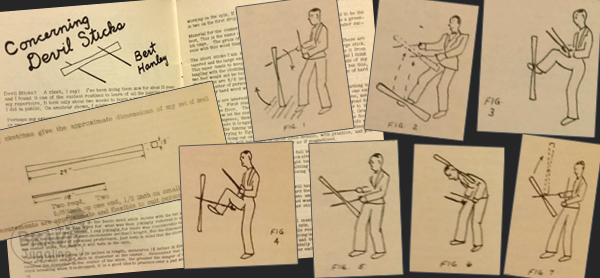
1944. The first magazine dedicated exclusively to juggling: “The Juggler’s Bulletin”, published monthly by Roger Montandon. It featured a mix of gossip, humor, act descriptions, convention news, photographs, and advice on performing tricks. The magazine played an early role in the foundation of the International Jugglers’ Association. A 1948 issue included a longer illustrated article on **devil sticks** by Bert Hanley, titled “Concerning Devil Sticks”.
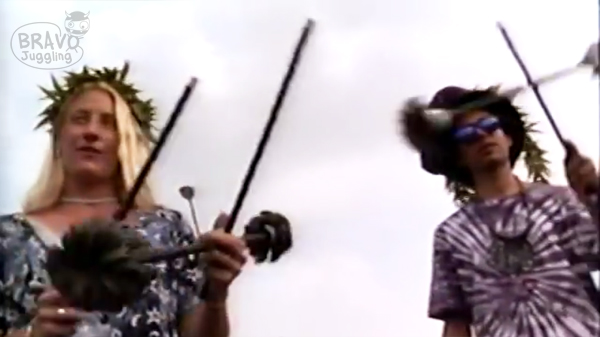
1980s. Tassel-ended devil sticks, commonly known as flower sticks, began to appear in the hippie scene, spreading particularly among fans of The Grateful Dead. The band toured constantly throughout their career, playing more than 2,300 concerts. Many fans followed tours for months, creating temporary marketplaces around venues where handmade items such as tie-dyed T-shirts and flower sticks were sold. (The illustration is from a 1994 documentary titled “Tie Dyed Grateful Dead Parking Lot Scene”.)
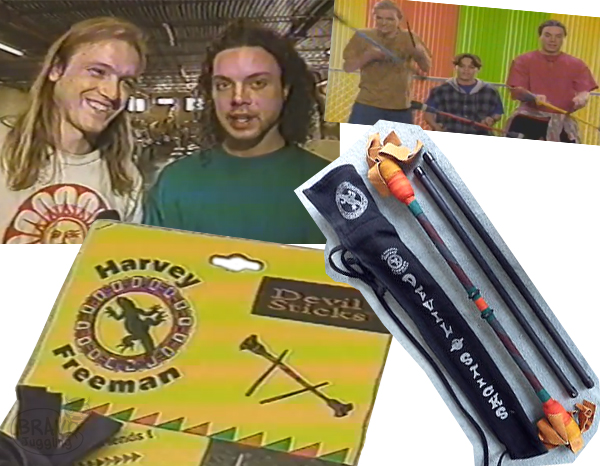
1995. Harvey Freeman Devil Sticks became the first mass-produced **devil sticks** aimed at the toy market. This flower stick was developed by Harvey McLeod and Christopher Freeman. Their success story began in 1990, when Harvey sold handmade T-shirts on the street and used his brother’s devil stick—brought from a Grateful Dead concert—to attract attention. As people showed more interest in the devil stick than the shirts, he shifted his focus to making the sticks instead. The two eventually went into business together, moved to Montreal, gained publicity in the Canadian press, and attracted investors who helped launch mass production. The small Canadian devil stick business grew almost overnight into a multimillion-dollar company.
1995. The **devil stick craze** in North America:
* Devil sticks ranked among the top ten best-selling toys in specialty retail shops (according to a survey published in the trade magazine “Playthings”).
* Devil sticks became the number one best-selling toy at Toys “R” Us Canada.
* Another Canadian toy company, Spin Master, sold 600,000 devil sticks that year, followed by an additional 1.15 million units in subsequent years.
* The “Flowerstick” name was trademarked by a third Canadian company, Goudurix. It is therefore possible that the term originated as a genericized brand name referring specifically to tassel-ended devil sticks.
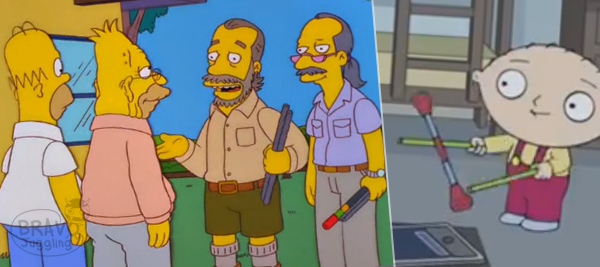
**Devil sticks** also became part of popular culture. Check out our collection of films and music videos that feature devil sticks.